
Blog Posts
Ketamine Therapy for Depression Explained
Apr
When standard antidepressants have taken weeks, months, or years without enough relief, ketamine therapy for depression gets attention for one reason – speed. Some patients report meaningful improvement within hours or days, not the usual long wait that comes with many conventional medications. That difference is why psychiatrists, researchers, and patients have taken it seriously, especially in cases where depression has not responded to multiple treatments.
This is not a simple miracle treatment, and it is not right for everyone. Ketamine sits in a different category from typical antidepressants, both in how it works and in how it is delivered. The appeal is real, but so are the limits, risks, and practical questions around cost, access, and long-term results.
What ketamine therapy for depression actually is
Ketamine has been used in medicine for decades as an anesthetic. In mental health care, much lower doses are used under medical supervision to target severe depression, treatment-resistant depression, and in some settings acute suicidal thinking. The goal is not sedation for surgery. The goal is a rapid change in depressive symptoms.
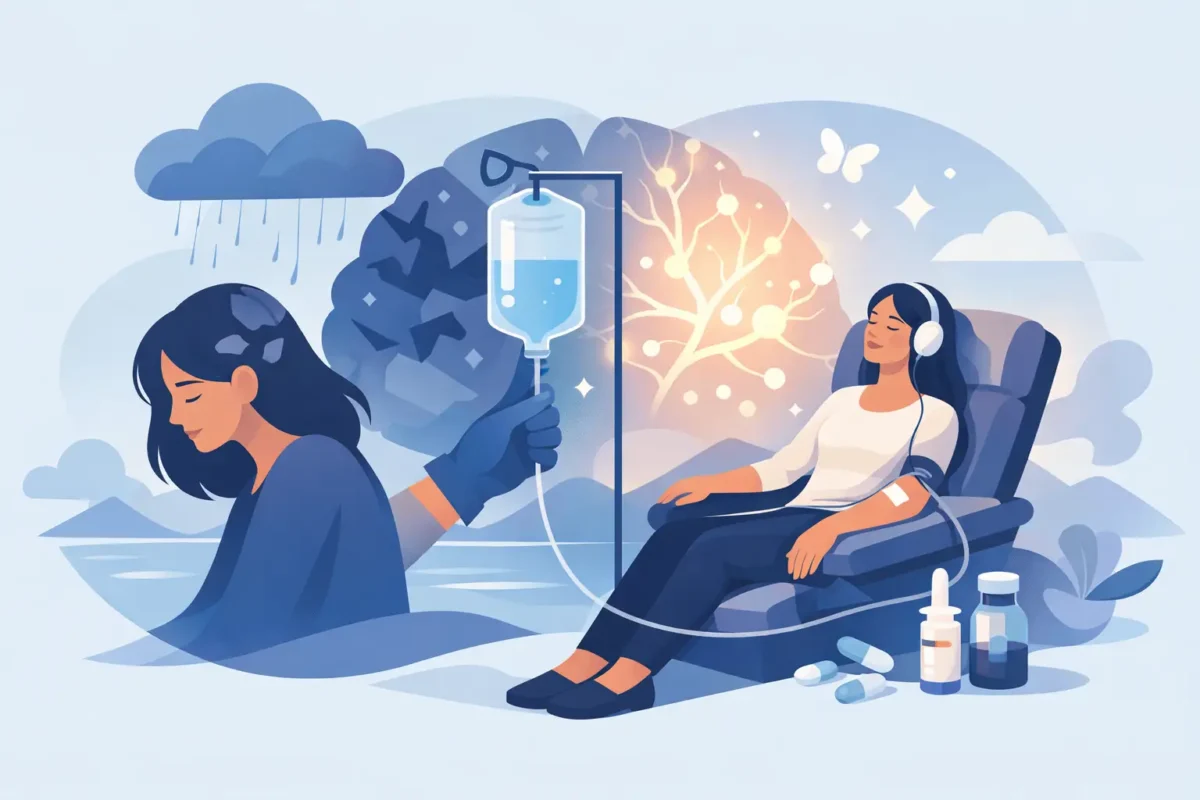
There are two main versions patients hear about. One is intravenous ketamine, usually given by infusion in a clinic. The other is esketamine, a nasal spray derived from ketamine and approved in the US for certain cases of depression when used alongside an oral antidepressant. Both are used in controlled settings, but the exact protocols can vary by provider.
That variation matters. Some clinics focus on highly structured psychiatric care with screening, monitoring, and follow-up. Others may look more like wellness centers. The treatment name can be the same, while the quality of evaluation and aftercare can be very different.
Why ketamine works differently
Most traditional antidepressants affect serotonin, norepinephrine, or dopamine systems and often require repeated daily dosing before benefits build. Ketamine therapy for depression works through a different pathway, mainly involving the brain’s glutamate system. Researchers believe this may help promote changes in neural connections linked to mood, flexibility, and recovery from depressive patterns.
That is the scientific reason it has generated so much interest. Patients who have cycled through multiple antidepressants without success are often not looking for a theory. They want to know whether they might finally feel some shift. Ketamine’s value is that for some people, it can create that shift quickly.
Still, quickly is not the same as permanently. A fast response can fade, and some patients need maintenance treatment. That is one of the biggest trade-offs in the current landscape. The treatment can be impressively rapid, but durability is less predictable.
Who may be a candidate
Ketamine is most often discussed for adults with treatment-resistant depression, meaning they have tried other appropriate treatments without enough benefit. It may also be considered in cases of major depressive disorder with urgent symptoms, including suicidal ideation, though that requires careful medical oversight.
A good evaluation usually looks at more than diagnosis alone. It should include symptom history, past medications, psychotherapy, substance use, blood pressure, heart health, and any history of psychosis or mania. This is where the real-world answer becomes more complicated than marketing language. Someone can be desperate for relief and still not be a safe or appropriate candidate.
For example, ketamine can temporarily raise blood pressure and heart rate. It can also produce dissociation, perceptual changes, or a sense of detachment during treatment. For some patients, that is manageable and brief. For others, it can be distressing or medically risky.
What treatment usually looks like
In an IV ketamine program, treatment often starts with a series of infusions over a few weeks, followed by reassessment. Esketamine programs are also structured, with patients receiving the medication in a clinic and staying for observation afterward. Patients are not supposed to take it and drive home as if it were a routine prescription.
The visit itself is usually calm and highly monitored. Vital signs are checked. The medication is administered. Then the patient waits under observation while the acute effects wear off. Some people feel relaxed or emotionally lighter. Others feel strange, dizzy, disconnected, or nauseated for a period of time.
That range of experiences is normal. One person’s dramatic improvement is another person’s mild benefit or disappointment. The idea that everyone walks out feeling instantly cured is not accurate.
Benefits patients and doctors pay attention to
The biggest benefit is speed. In severe depression, speed is not a luxury. It can matter when someone is struggling to function or dealing with suicidal thoughts. That is why ketamine has changed parts of the conversation around urgent psychiatric care.
Another important benefit is that it may help when other treatments have failed. Patients who have tried several antidepressants often reach a point where each new option feels like more waiting with uncertain payoff. Ketamine offers a different mechanism, which is exactly why some of those patients respond.
There is also a psychological effect that is harder to measure but still relevant. A rapid reduction in symptoms can restore a sense of possibility. That does not replace therapy, lifestyle changes, or long-term psychiatric care, but it can make those things feel achievable again.
Risks, downsides, and where the hype gets ahead of the evidence
Ketamine is not risk free. Short-term side effects can include dizziness, nausea, increased blood pressure, anxiety, sedation, headache, and dissociation. These effects usually wear off, but they are part of the treatment, not rare exceptions.
There are also questions about repeated use over time. Research is still developing on long-term maintenance, ideal dosing schedules, and which patients benefit most sustainably. Some clinics promote ketamine aggressively, but the evidence is stronger for some uses than others. Patients should be cautious around claims that sound absolute.
Another issue is access. Treatment can be expensive, and insurance coverage varies widely, especially for IV ketamine. Esketamine may be covered more often in some plans because it has FDA approval for specific indications, but cost remains a real barrier.
Then there is the mismatch between symptom relief and full recovery. A patient may feel less depressed after treatment and still need ongoing care for trauma, anxiety, isolation, sleep disruption, or relapse prevention. Ketamine can open a door. It does not build the whole structure.
How to evaluate a clinic
The best clinics do more than administer a drug. They screen carefully, explain risks clearly, coordinate psychiatric care, and set realistic expectations. They do not promise a cure or push patients through a high-volume pipeline with little follow-up.
Patients should expect to be asked about diagnosis, treatment history, medical conditions, and current medications. They should also expect a conversation about what happens if ketamine helps only briefly or not at all. That is a sign of serious care, not pessimism.
A weak clinic often reveals itself through overselling. If the message is all speed and no nuance, that is a problem. Good treatment programs respect the fact that depression is complicated.
The bigger question – is it worth considering?
For the right patient, yes. Ketamine therapy for depression is one of the more significant developments in psychiatric treatment because it offers something many patients have not had before – the possibility of fast relief after repeated failures with standard approaches.
But worth considering is not the same as worth pursuing at any cost. The right setting, the right medical review, and the right expectations matter. A patient with severe, persistent depression may reasonably see ketamine as a serious option. A patient looking for a simple shortcut may be disappointed.
The most grounded way to think about ketamine is this: it is neither overhyped nonsense nor a guaranteed breakthrough. It is a legitimate treatment option with real potential, real limits, and a growing role in depression care. For people who have been stuck for a long time, that may be enough reason to ask a better question than whether it is perfect. The better question is whether it fits their situation, their risks, and their path forward.